रूलेट सिस्टम के इतिहास
दांव बदले के नियम लिखत लोग के दू सदी।
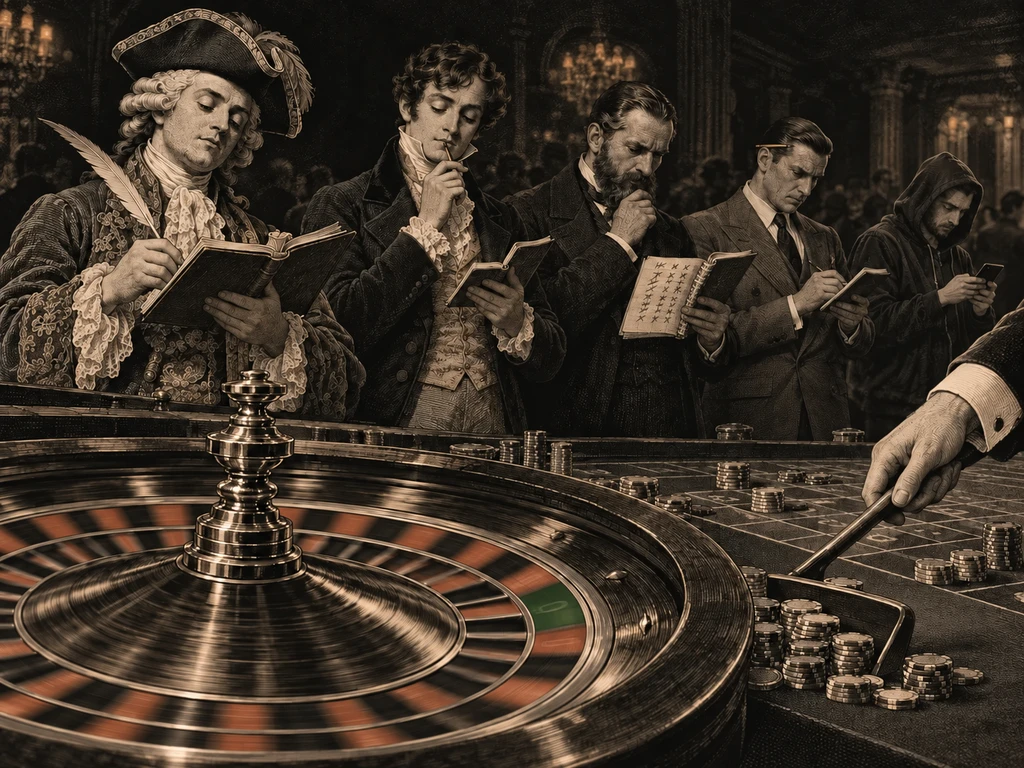
मार्टिंगेल 18वीं सदी के ह; द'अलेम्बेर्ट के नाम ओह गणितज्ञ पर पड़ल जिनका ई पसंदे ना रहे; लाबुशेयर एगो विक्टोरिया-जमाना के नेता के सवख ह। तबो एह में से कवनो काम ना करत रहे।
मार्टिंगेल
The 1762 Académie française dictionary records martingaleरणनीतिमार्टिंगेलप्रगति-क्रम जवन हर हार के बाद दांव दोगुना कर देला। ई का करेला आ का ना करेला, एकरा खातिर रणनीति वाला हिस्सा देखीं।पूरा पढ़ीं → as a gambling term for staking what has been lost. Its 1878 edition explicitly describes doubling after a loss and also uses the word more broadly for betting schemes. These entries document usage; they do not identify a single inventor.
Today the familiar doubling progressionरणनीतिप्रगति-क्रमकवनो नियम जवन पिछला नतीजा के हिसाब से दांव के रकम बदलेला। नकारात्मक प्रगति-क्रम हार के बाद दांव बढ़ावेला, सकारात्मक जीत के बाद।पूरा पढ़ीं → aims to recover previous losses and gain one starting unitपइसाइकाईमूल दांव जवना में कवनो सिस्टम भा खेलाड़ी हिसाब करेला। प्रगति-क्रम इकाई में बतावल जाला ताकि ऊ कवनो टेबल पर लागू हो सके।पूरा पढ़ीं → when a win arrives. A finite bankrollपइसाखेले के पूँजीखेले खातिर अलगा रखल कुल रकम। पूँजी के संभाल माने ई तय कइल कि हर दांव आ हर सत्र में एकर केतना हिस्सा जोखिम में डालल जाव।पूरा पढ़ीं → or table limitटेबलटेबल के सीमाइजाजत वाला सबसे छोट आ सबसे बड़ दांव। सबसे बड़ वाला सीमा ही दोगुना करे वाला प्रगति-क्रम के रोकेला।पूरा पढ़ीं → can stop the sequence first. The Strategy section shows how those limits affect a session.
द'अलेम्बेर्ट
The progression bearing d’Alembert’s name raises the stake by one unit after a loss and lowers it after a win. The name alone does not prove who devised or endorsed the betting rule.
Its mathematical issue is straightforward: on independent spinsगणितस्वतंत्र स्पिनपिछला इतिहास चाहे जवन होखे, हर स्पिन के संभावना एके रहेला। एह साइट के हर हिसाब के नेंव इहे बा।पूरा पढ़ीं →, a run of one outcome does not make the opposite outcome due. A famous namesake does not change that assumption or the payoutपइसाभुगतानजीतल दांव पर जवन मिलेला, “X पर 1” के रूप में बतावल, लवटावल दांव के ऊपर से।पूरा पढ़ीं →.
लाबुशेयर
The cancellation system uses a list of numbers to determine the next stake. A win removes entries and a loss adds an entry; the Strategy section sets out the rules and examples. Historical stories about its namesake should be distinguished from evidence that the method creates an advantage.
A sequence may clear with a profit, but a losing run can leave a growing list and larger required stakes. How often it clears depends on the starting list, bankroll, limits and stopping rule. There is no universal success percentage.
20वीं सदी
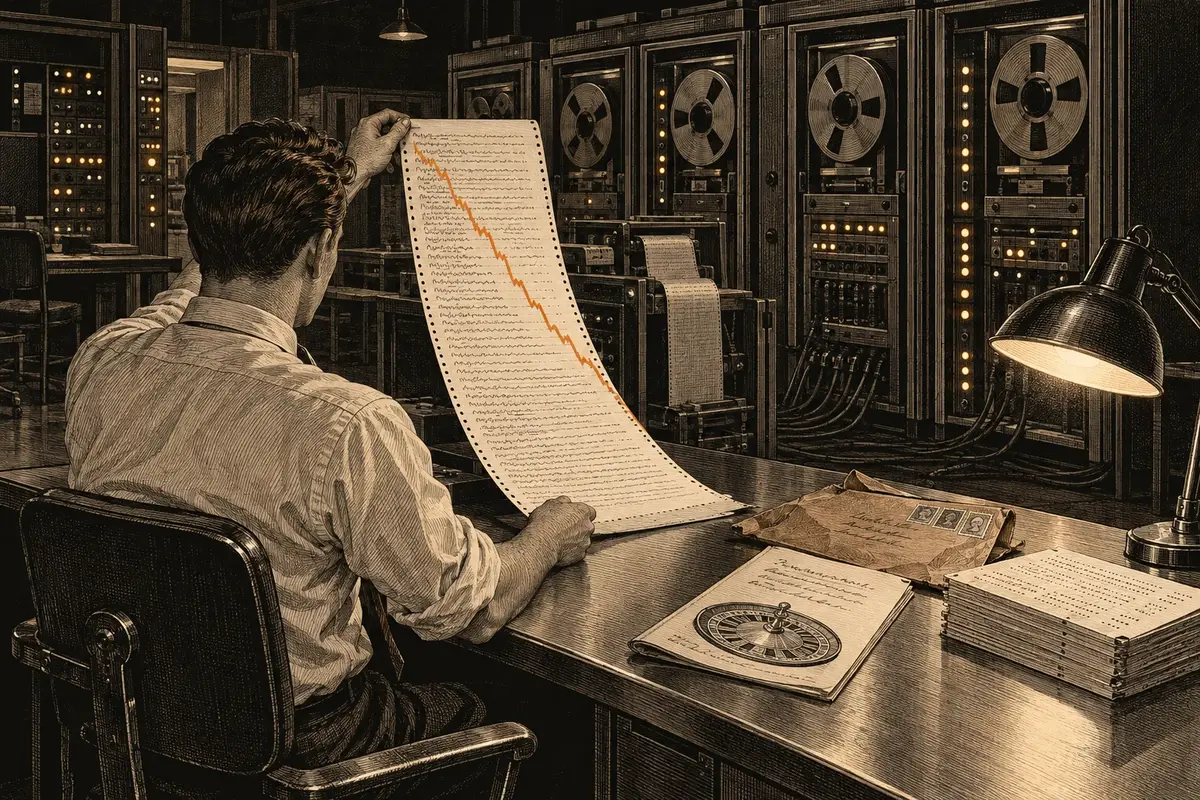
A simulation can show how a specified system behaves under a chosen wheel model. It cannot test every possible rule, and a finite run need not return exactly the theoretical house edgeगणितहाउस एजहर दांव के ऊ हिस्सा जवन कसीनो औसतन रख लेला: यूरोपीय रूलेट में 2.70%।पूरा पढ़ीं →.
For independent uniform single-zeroव्हीलशून्यअकेला हरियर पॉकेट जवना के कवनो सम-धन, दर्जन भा कॉलम दांव ना ढँकेला; हाउस एज के जड़ इहे बा। दोसर नाम: single zero, 0।पूरा पढ़ीं → spins with standard full-loss-on-zero payouts, each unit staked has expected net return −1/37. For a bounded session whose stakes are chosen using information available before each spin, adding the conditional expectations gives expected lossगणितअपेक्षित घाटाअपेक्षित मान गुणा कुल लगावल रकम; कवनो सत्र भा समय में औसतन होखे वाला घाटा।पूरा पढ़ीं → equal to 1/37 of expected turnoverपइसाकुल दांव-रकमकवनो सत्र भा समय में लगावल कुल रकम, फेर से लगावल जीत समेत। दोसर नाम: handle, action।पूरा पढ़ीं →. Stopping or changing stakes can change the distribution of results, but not create positive expectation under those assumptions. Other payouts, such as la partageनियमLa partageफ़्रेंच नियम: जब शून्य आवेला, सम-धन दांव के आधा रकम वापस मिलेला। एह दांव पर हाउस एज आधा होके 1.35% हो जाला।पूरा पढ़ीं →, need their own calculation.
भरम: अइसन रूलेट रणनीति जे हमेशा जीतेरूलेट के फ़िबोनाची रणनीति
ई सभ जिंदा काहे बा
A demonstration can end in profit without showing that the method has an edge. Some rules favor frequent small wins at the cost of occasional large losses; others do the reverse. The proportions depend on the exact rules and limits.
When comparing systems, look at all completed sessions, total stakes, losses and stopping conditions. A selected winning example leaves out the information needed to assess the claim.
बिकाऊ सिस्टम
Systems have also been sold with elaborate names and entry rules. The examples below illustrate the arithmetic of specific rules; they are not evidence of who first invented or marketed them. Waiting for a pattern does not alter the next independent spin’s probabilities.
ऊ चीज जवन सिस्टम ना ह
रोके के नियम: पहिलहीं तय कइल कि केतना हारे के बा चाहे जीते के बा, आ उठ जाए के। ई सभ अक्सर सिस्टम के हिस्सा बना के बेचल जाला, आ अकेला इहे हिस्सा कुछ करेला, काहे कि ई कुल दांव-रकम घटावेला। एकरा नाम पर केहू के नाम नइखे, जवन ठीके बा।
सवाल
मार्टिंगेल, एक सदी भा ओकरा से अधिक से। हार के बाद दोगुना कइल ऊ पहिला बिचार ह जवन सभ के मन में आवेला।
D’Alembert गलती से सबसे लगे पहुँचलें। Pascal, Fermat, Huygens, Bernoulli आ Laplace सभ बतवलें कि ई सभ काहे फेल होला।
काहे कि अधिकतर सत्र जीतेला, आ जीतत सत्र के वीडियो बनावल सस्ता बा।
हँसी के बीच
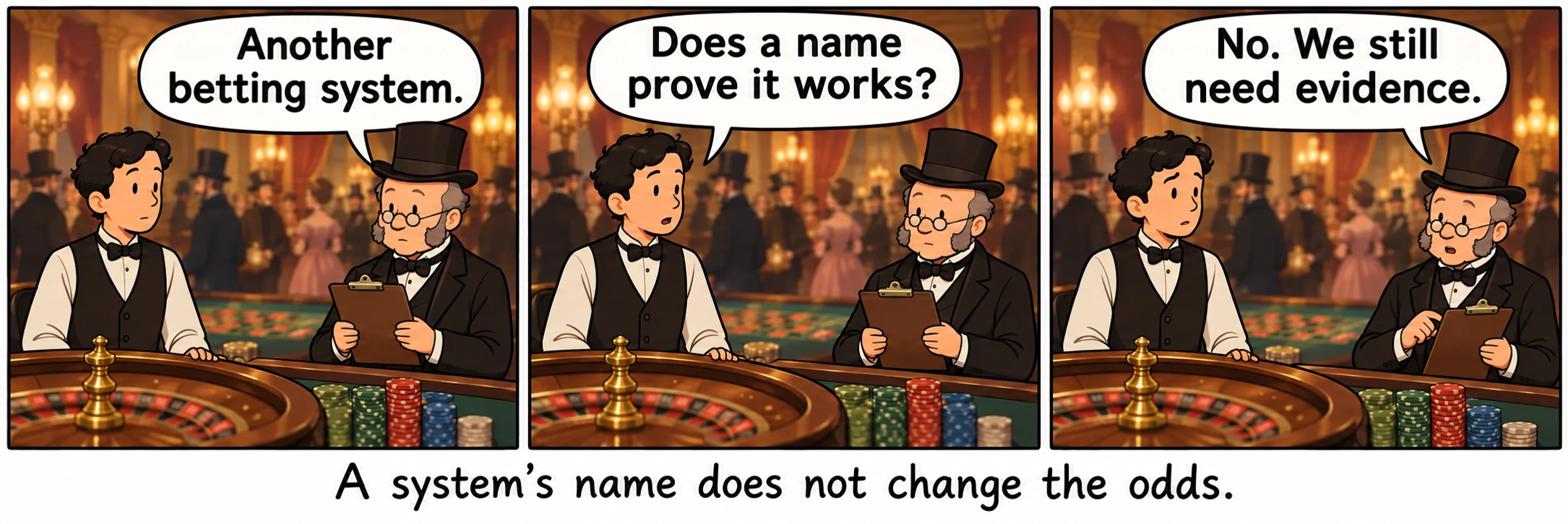
दू सदी के नाम। एगो संख्या।
स्रोत
- Thorp, E. O. “Optimal gambling systems for favorable games.”
- Thorp, E. O. The Mathematics of Gambling.
- Doob, J. L. “Note on probability.”
- Halmos, P. R. “Invariants of certain stochastic transformations: the mathematical theory of gambling systems.”
- d’Alembert, J. “Croix ou pile.”
- Schwartz, D. G. Roll the Bones: The History of Gambling.
- Kavanagh, T. M. Dice, Cards, Wheels: A Different History of French Culture.
- Bollman, M. Mathematics of the Big Four Casino Table Games: Blackjack, Baccarat, Craps, & Roulette.
- Académie française, martingale, 1762
- Académie française, martingale, 1878