भरम पहचानीं
टेबल पर कहल छोट-छोट बात। बताईं कि कवन भरम काम करत बा: जुआरी के भरम, हॉट हैंड, काबू में होखे के भरम, घाटा के पाछे भागल भा चुनिंदा याद।
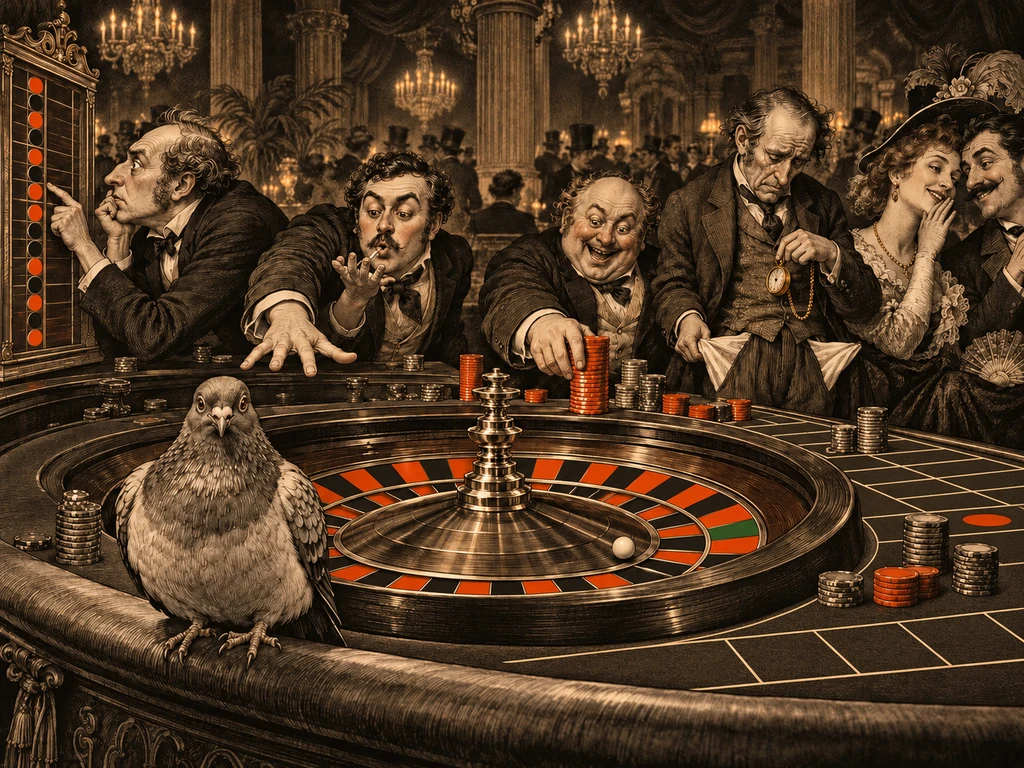
पंद्रह गो के भंडार से दस गो कथन, पाँच गो भरम, हर एक के एगो सही जवाब। एह में से हर बात आज रात कवनो ना कवनो रूलेट टेबल पर कहल गइल बा।
अंक के हिसाब
10: all ten answers correct.
8–9: a strong result; review the explanations for anything you missed.
5–7: a useful start. Follow the reading links to revisit the topics that need practice.
0–4: take your time with the explanations, then try another set when you feel ready.
The score is a learning guide, not a professional qualification or a prediction of gambling results.
पाँच गो विकल्प
Gambler’s fallacy: treating a result as due because of earlier outcomes. Hot handभरमहॉट हैंडई मान्यता कि लगातार जीत, भा एके नतीजा के सिलसिला, अगिला के संभावना बढ़ा देला। व्हील पर ई उलटल जुआरी के भरम ह।पूरा पढ़ीं →: treating recent success as evidence that success will continue. Illusion of control: attributing an outcome to an action that does not affect its probabilities. Chasing losses: treating past losses as a reason that another wager must be made. Selective memory: giving remembered hits more weight than overlooked misses.
दायरा मायने रखेला
रूलेट के उदाहरण स्वतंत्र, एक-समान नतीजा मान के चलेला। लगातार नतीजा के सिलसिला अपने-आप में भौतिक पक्षपात साबित ना करे। पक्षपात के सबूत खातिर तय परीक्षण आ स्वतंत्र पुष्टि चाहीं, ई भावना ना कि कवनो नंबर गरम बा।
सवाल
रूलेट में ना। कुछ हुनर वाला खेल में सबूत मिलल-जुलल बा। व्हील के लगे कवनो हुनर नइखे जे गरम चले।
घाटा के पाछे भागल, बहुत आगे। दोसर भरम ई बदलेला कि रउआ कवन दांव लगावत बानी; पाछे भागल ई बदलेला कि केतना लगावत बानी।
हँसी के बीच
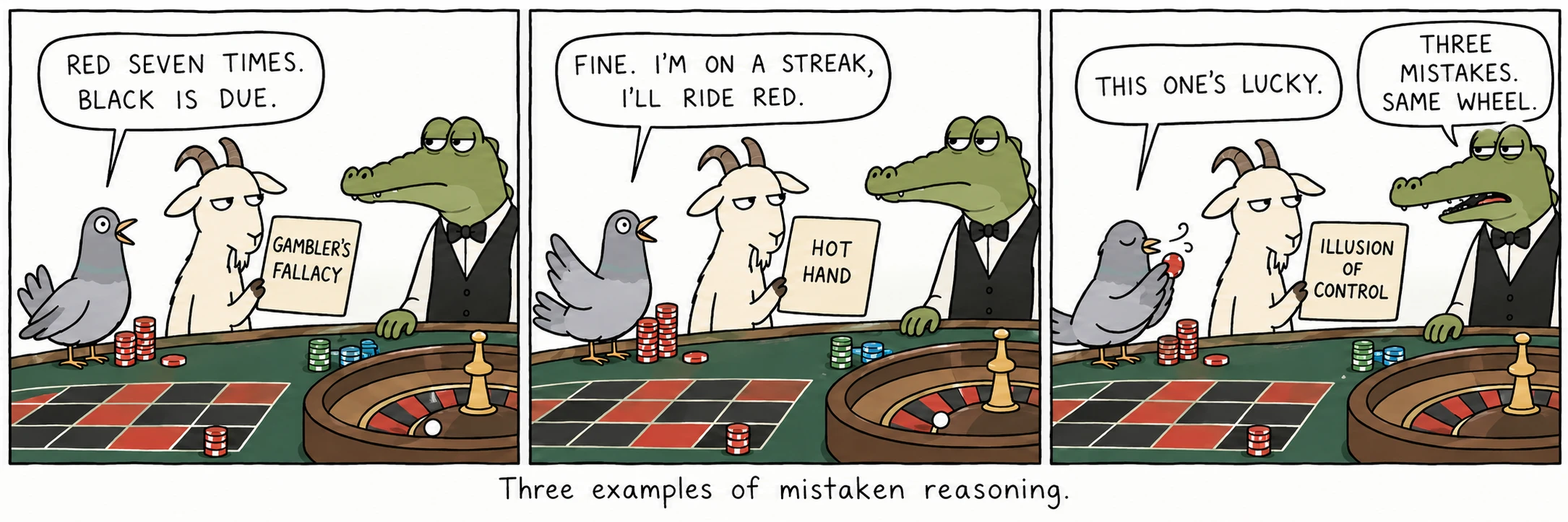
पाँच गो भरम। एगो कबूतर।
स्रोत
- Tversky, A. and Kahneman, D. “Judgment under uncertainty: heuristics and biases.”
- Langer, E. “The illusion of control.”