केली मानदंड आ रूलेट
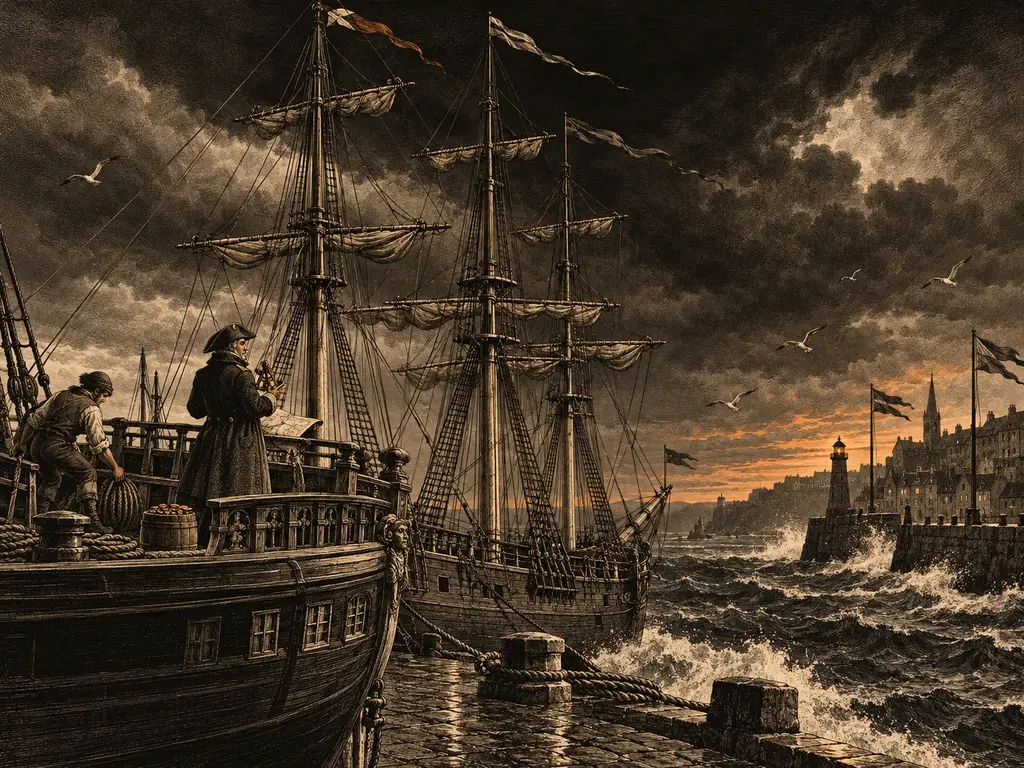
Kelly कसौटी एज वाला दांव लगावे वाला के बतावेले कि केतना दांव लगावे के बा। रूलेट खातिर एकर जवाब साफ बा: कुछुओ ना।
Kelly दांव = एज / ऑड्स। नकारात्मक एज पर सूत्र नकारात्मक भिन्न देला, जेकर मतलब बा दांव मत लगाईं। तबो ई समझे में काम आवेला कि पक्षपात के फायदा उठावे वाला खेलाड़ी आपन दांव के आकार ओइसन काहे तय करत रहलें, आ बाकी सभ के आकार बजट के हिसाब से काहे तय करे के चाहीं।
कसौटी
John Kelly (1956) asked how a gambler with a known edge should size bets to maximize long-run growth of the bankrollपइसाखेले के पूँजीखेले खातिर अलगा रखल कुल रकम। पूँजी के संभाल माने ई तय कइल कि हर दांव आ हर सत्र में एकर केतना हिस्सा जोखिम में डालल जाव।पूरा पढ़ीं →. The answer, for a bet paying b to 1 with win probabilityगणितसंभावनाकवनो नतीजा के मौका, 0 से 1 ले भा 0% से 100% ले। एगो नंबर: 1/37 = 2.70%।पूरा पढ़ीं → p and loss probability q = 1 − p, is to stake the fraction f* = (bp − q) / b of the bankroll. Positive f* means bet that fraction; zero or negative means do not bet. Kelly worked at Bell Labs, and his paper, “A new interpretation of information rate”, set the problem in Claude Shannon’s theory of information: a gambler who gets tips over a noisy line, at fair odds, can grow the bankroll at best at the rate the line carries information. This is a growth objective under a probability model, not a promise to finish ahead after a particular number of bets. A spending limit, finite deadline or payoutपइसाभुगतानजीतल दांव पर जवन मिलेला, “X पर 1” के रूप में बतावल, लवटावल दांव के ऊपर से।पूरा पढ़ीं → cap changes the decision problem.
रूलेट में Kelly दांव
For redदांवलाल18 गो लाल नंबर पर सम-धन दांव। फ़्रेंच में: rouge।पूरा पढ़ीं →: b = 1, p = 18/37, q = 19/37; f* = (18/37 − 19/37)/1 = −1/37. For a straight upदांवस्ट्रेट-अपएगो अकेला नंबर, भुगतान 35:1।पूरा पढ़ीं →: b = 35, p = 1/37, q = 36/37; f* = (35/37 − 36/37)/35 = −1/1295. Every standard bet gives a negative Kelly fraction, because every bet has a negative edge, and the growth-optimal stake is zero. Kelly betting on roulette is a formal way of saying what the house-edge page says: no positive stake maximizes expected logarithmic growth when the bet has negative expectation. A particular session can still end in profit. La partageनियमLa partageफ़्रेंच नियम: जब शून्य आवेला, सम-धन दांव के आधा रकम वापस मिलेला। एह दांव पर हाउस एज आधा होके 1.35% हो जाला।पूरा पढ़ीं → needs a separate three-outcome calculation: a win, a full loss or a half-loss on zeroव्हीलशून्यअकेला हरियर पॉकेट जवना के कवनो सम-धन, दर्जन भा कॉलम दांव ना ढँकेला; हाउस एज के जड़ इहे बा। दोसर नाम: single zero, 0।पूरा पढ़ीं →. Its expected log growth also falls as the stake increases from zero.
जहाँ Kelly सचमुच लागू भइल
Suppose a pocketउपकरणपॉकेटरोटर पर बनल 37 गो नंबर वाला खाना में से एगो। दोसर नाम: slot, cup।पूरा पढ़ीं → really has a stable, known probability of 1 in 30 and pays 35 to 1. The Kelly fraction is 0.57%: about $57 from a $10,000 bankroll. Under independent spinsगणितस्वतंत्र स्पिनपिछला इतिहास चाहे जवन होखे, हर स्पिन के संभावना एके रहेला। एह साइट के हर हिसाब के नेंव इहे बा।पूरा पढ़ीं → and exact fractional staking, the geometric growth factor over 1,000 spins is about 1.7. Expected bankroll grows faster because rare large wins pull up the average. These are model calculations, not evidence that any named historical player used Kelly or achieved this result.
आम आ औसत
The gap between the typical bankroll and the average one is wide. Take a pocket that hits 1 time in 25, a hypothetical edge of 44% per unitपइसाइकाईमूल दांव जवना में कवनो सिस्टम भा खेलाड़ी हिसाब करेला। प्रगति-क्रम इकाई में बतावल जाला ताकि ऊ कवनो टेबल पर लागू हो सके।पूरा पढ़ीं → staked. Kelly stakes 1.26% of the bankroll on it. After 1,000 spins the typical bankroll has grown about 11.5 times, while the average, pulled up by a few very lucky runs, has grown about 249 times. Betting more than Kelly raises the average and lowers the typical result: at twice the Kelly stake the typical bankroll only doubles, and by two and a half times the Kelly stake it shrinks, although every bet still carries a 44% edge. In this example, half-Kelly retains about 78% of the expected log growth. This fraction depends on the probabilities and payout.
जब एज खाली अंदाजा होखे
Kelly uses the true probabilities, but a player usually has only estimates. Selecting the busiest pocket from a past record creates a selection problem: even a fair wheel has a busiest pocket. Its observed rate can overstate its future probability. Choosing the stake from that same record compounds the error. An independent follow-up sample helps test a proposed bias (see How to Detect Roulette Wheel Bias). Reducing the calculated fraction reduces exposure, but cannot turn a false edge into a real one.
एज वाला लोग
Haghani and Dewey (2016) studied 61 participants given $25 and 30 minutes to bet on a simulated coin with a disclosed 60% chance of heads. The payout cap was $250; its value was revealed when a proposed winning bet would reach it. Their reported 21% success category included balances of at least $200, while the 28% “bust” category meant less than $2, not necessarily zero. Eighteen participants bet their entire balance on one flip. The uncapped Kelly fraction is 20%, but the cap and deadline change the optimization problem. The experiment illustrates how stake choices matter even with a known advantage; it does not establish one best strategy for every objective.
एकरा बदले का अपनाईं
एज के बिना आकार तय कइल बढ़ंती के ना, बजट के सवाल ह: दांव = ऊ रकम जवन रउआ हर स्पिन पर खरचे खातिर तइयार बानी, जवन घंटा के बजट आ टेबल के रफ्तार से निकलेला (खेले के पूँजी के प्रबंधन वाला पन्ना)। आम खेलाड़ी खातिर Kelly के योगदान ओकरा जवाब के साफाई बा: शून्य। शून्य से ऊपर जवन कुछ रउआ लगावत बानी ऊ खेले के दाम ह, जवना के रउआ चुनत बानी, कवनो सूत्र एकरा के अनुकूल ना बनावेला।
भिन्नात्मक Kelly आ “मनी मैनेजमेंट” पर एगो बात
Betting a fixed percentage of the current bankroll is proportional staking: the stake rises after wins and falls after losses. Flat bettingरणनीतिस्थिर दांवहर स्पिन पर एके रकम के दांव। हर प्रगति-क्रम के एही से तुलना कइल जाला।पूरा पढ़ीं → instead keeps the cash stake fixed. Neither creates an edge on ordinary roulette. With infinitely divisible stakes and a fraction below 100%, proportional staking never reaches exactly zero in finitely many losses, but the balance can become arbitrarily small. Real table minimums can prevent further play much sooner. The growth-optimal fraction remains zero.
सूत्र
सवाल
Only when the actual probabilities, payouts and conditions give a credible positive advantage. Standard bets on an unbiased wheel have no such advantage.
Using half the calculated fraction reduces exposure to errors in the estimated edge. The familiar three-quarters-growth rule is an approximation for small advantages, not a universal identity. It does not protect against an edge that does not exist.
ना। Kelly एज होखे पर बढ़ंती के अनुकूल बनावेला। खेले के पूँजी के प्रबंधन एज ना होखे पर खरच के काबू में रखेला।
गणित के साथे मनोरंजन
पहिले रउआ खुद आजमाईं। हर हल मोड़ के छिपावल बा; जब तइयार होखीं तब खोलीं।
Suppose a hypothetical bet on one number has a known 44% edge under standard payoutsपइसाभुगतानजीतल दांव पर जवन मिलेला, “X पर 1” के रूप में बतावल, लवटावल दांव के ऊपर से।पूरा पढ़ीं → and independent spinsगणितस्वतंत्र स्पिनपिछला इतिहास चाहे जवन होखे, हर स्पिन के संभावना एके रहेला। एह साइट के हर हिसाब के नेंव इहे बा।पूरा पढ़ीं →. Kelly gives a 1.26% bankrollपइसाखेले के पूँजीखेले खातिर अलगा रखल कुल रकम। पूँजी के संभाल माने ई तय कइल कि हर दांव आ हर सत्र में एकर केतना हिस्सा जोखिम में डालल जाव।पूरा पढ़ीं → fraction. What if the same 44% edge came on one bet spread over five neighboring numbers?
हल देखाईं
जवाब तब Kelly पूँजी के 7.1% कहेला, आ पूँजी लगभग छव गुना तेजी से बढ़ेले: 1,000 दांव में मोटा-मोटी 1.25 मिलियन गुना, मोटा-मोटी 11.5 गुना के मुकाबले।
A straight upदांवस्ट्रेट-अपएगो अकेला नंबर, भुगतान 35:1।पूरा पढ़ीं → with a 44% edge wins with chance 0.04, since 36 × 0.04 = 1.44. Kelly’s stake is the edge divided by the odds: 0.44/35 = 1.26%. The typical growth per bet is 0.04 × ln(1 + 35 × 0.0126) + 0.96 × ln(1 − 0.0126) ≈ 0.00244, so 1,000 bets multiply the bankroll by about e^2.44 ≈ 11.5.
Spread one stake over five numbers and the bet wins with chance 0.20 and pays 36/5 for 1, that is 6.2 to 1: still a 44% edge, since 0.2 × 7.2 = 1.44. Kelly’s stake becomes 0.44/6.2 = 7.10%, and the growth per bet 0.01404, about 5.75 times as much. Over 1,000 bets that is e^14.04, about 1.25 million.
The edge is the same; the swings are smaller. A bet that wins one time in five has a larger growth-optimal fraction in this model, although losses can still reduce the bankroll severely. This comparison assumes the same known edge for both bets; actual predictions need independent evidence.
Assume two numbers are adjacent on the betting layoutउपकरणलेआउटटेबल पर छपल दांव वाला ग्रिड। दोसर नाम: table, felt, cloth।पूरा पढ़ीं → and each has a stable, known probabilityगणितसंभावनाकवनो नतीजा के मौका, 0 से 1 ले भा 0% से 100% ले। एगो नंबर: 1/37 = 2.70%।पूरा पढ़ीं → of 1 in 25 on independent spins. Compare a splitदांवस्प्लिटसटल दू गो नंबर, भुगतान 17:1।पूरा पढ़ीं → between them at 17 to 1 with equal straight-up stakes on the two numbers. How much does Kelly say, and how fast does the bankroll grow compared with one such pocketउपकरणपॉकेटरोटर पर बनल 37 गो नंबर वाला खाना में से एगो। दोसर नाम: slot, cup।पूरा पढ़ीं →?
हल देखाईं
जवाब कवनो फरक ना पड़े: स्प्लिट पर पूँजी के 2.59%, भा हर नंबर पर 1.29%। आम पूँजी 1,000 स्पिन में मोटा-मोटी 155 गुना बढ़ेले, एगो पॉकेट से 11.5 गुना के मुकाबले।
The split wins with probability 2/25 = 0.08 and pays 17 to 1, so it returns 18 × 0.08 = 1.44 per unitपइसाइकाईमूल दांव जवना में कवनो सिस्टम भा खेलाड़ी हिसाब करेला। प्रगति-क्रम इकाई में बतावल जाला ताकि ऊ कवनो टेबल पर लागू हो सके।पूरा पढ़ीं → staked: an edge of 44%, the same as one biased pocket. Kelly’s stake is the edge divided by the odds: 0.44/17 = 2.59%.
Two straight-up bets of 1.29% each give exactly the same results. When either number comes up, one chipपइसाचिपएगो तय रकम के बदला में टोकन, जवन दांव लगावे खातिर लेआउट पर रखल जाला। दोसर नाम: check।पूरा पढ़ीं → wins 35 to 1 and the other is lost, a net of 34 × 1.29% = 44% of the bankroll, as the split pays; when neither does, both are lost.
The growth per spin is 0.00505, against 0.00244 for one pocket, so over 1,000 spins the typical bankroll grows e^5.046 ≈ 155 times rather than e^2.44 ≈ 11.5 times. The geometric growth factor is larger because the combined bet wins more often at the same 44% edge. It is a model result, not a guaranteed bankroll.
हँसी के बीच
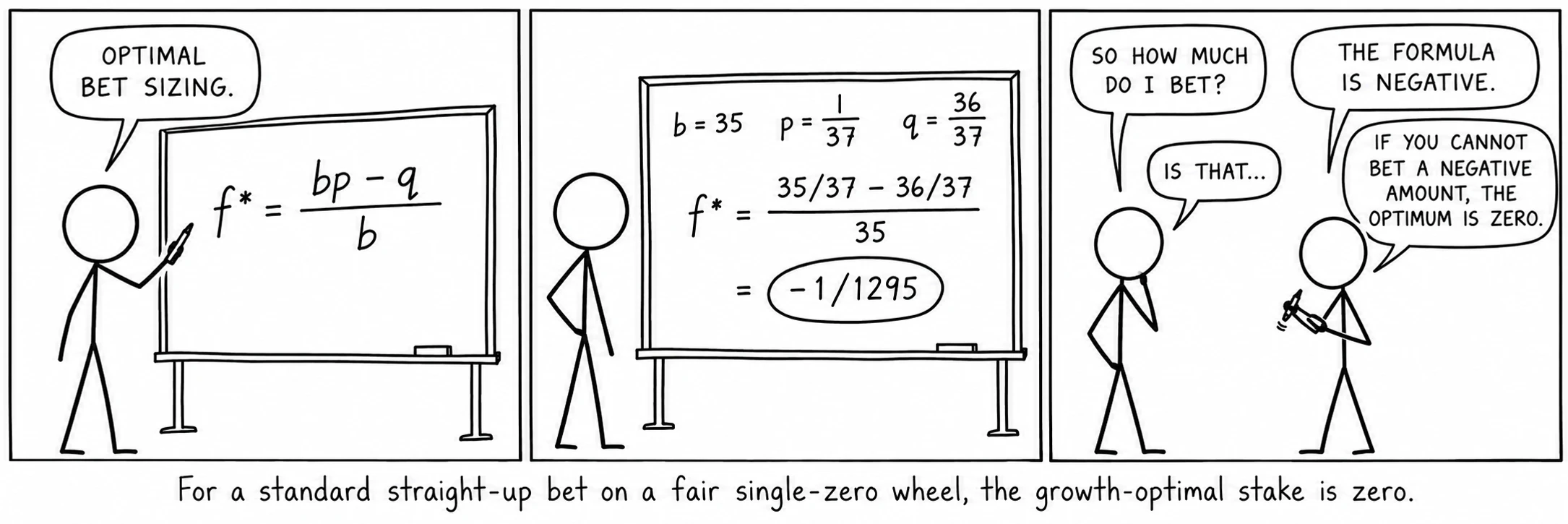
बढ़ंती खातिर सबसे बढ़िया रूलेट दांव ऊ संख्या ह जवन सभे पहिले से जानेला।
स्रोत
- Kelly, J. L. “A new interpretation of information rate.”
- Breiman, L. “Optimal gambling systems for favorable games.”
- Thorp, E. O. “Optimal gambling systems for favorable games.”
- Thorp, E. O. The Mathematics of Gambling.
- Epstein, R. A. The Theory of Gambling and Statistical Logic, 2nd ed.
- Taylor, D. G. Games, Gambling, and Probability: An Introduction to Mathematics, 2nd ed.
- Ethier, S. N. The Doctrine of Chances: Probabilistic Aspects of Gambling.
- Haghani, V. & Dewey, R. “Rational decision-making under uncertainty: observed betting patterns on a biased coin.”